Sustainability

The University of Cambridge has a long-standing commitment to environmental sustainability, supported by a dedicated team that provides operational leadership and guidance on the University’s strategy, delivery, and progress toward a more sustainable future.
The University’s key sustainability priorities include Sustainable research and innovation, Carbon reduction and energy use, Travel and transport, Waste reduction and circular economy, Biodiversity and nature and Water management. Read more about the University’s sustainability priorities.
Sustainable Research and Innovation
Aligned with the University’s sustainability priorities, the School of Biological Sciences is committed to delivering responsible research and reducing the environmental impact of our scientific activities.
The University is a signatory of the Concordat for the Environmental Sustainability of Research and Innovation Practice, providing a framework for embedding sustainability into research culture, infrastructure and decision‑making. This includes reducing carbon emissions from laboratories and equipment, improving resource efficiency, and minimising waste associated with research activities.
By working with researchers, professional services and external partners, the University aims to integrate sustainability considerations into the full research lifecycle, from planning and procurement to delivery and dissemination, helping to ensure that world‑leading research is undertaken in a way that supports long‑term sustainability goals.
Global leaders in the Biology of Sustainability
The School of Biological Sciences is home to globally renowned research addressing environmental and sustainability challenges across the breadth of biology, from plant and animal resilience to human health and planetary protection. This research leadership is increasingly supported by strategic investment in people, platforms and place, ensuring that sustainability is reflected not only in what we study, but in how and where we conduct our science.
Biodiversity
Our commitment to biodiversity reflects the fundamental role of nature in sustaining life on Earth. Through research that protects, restores and enhances natural systems, we contribute to solutions for climate change, ecosystem decline and environmental resilience at local, national and global scales. This approach is exemplified by the Cambridge Conservation Initiative, which brings together world‑leading researchers and practitioners to advance innovative, collaborative solutions for nature and people.
One Health
One Health at Cambridge brings together researchers across human, animal, plant and environmental systems to tackle urgent global health challenges, including emerging infectious diseases, antimicrobial resistance, and the health impacts of climate and environmental change.
Food Security
Food security is fundamental to human and planetary wellbeing. Through research in plant science, crop resilience and sustainable agriculture, the School of Biological Sciences addresses the challenges posed by climate change, emerging plant diseases and environmental stress on global food systems. Working across disciplines and in partnership with researchers, farmers and institutions worldwide, we develop science‑led solutions that strengthen plant health, improve nutrition and support resilient, sustainable food systems for the future.
Equitable Partnerships
Across low‑ and middle‑income countries, our researchers work in equitable partnerships to address the interconnected challenges of health, environment and social sustainability. In collaboration with local researchers, communities and institutions, we co‑produce context‑specific, scalable solutions that strengthen systems, support resilience and deliver lasting global benefit.
Mental Health
Research into mental health places wellbeing, resilience and social sustainability at its core. This work recognises the close interconnection between healthy people, communities and environments, and its importance for long‑term individual and societal resilience. Bespoke research projects, developed in partnership with University Student Services, translate evidence directly into practice, informing a sustainable people strategy that supports long‑term success across the University community.
Future of Therapeutics
In our future of therapeutics research, sustainability is embedded across the full innovation pathway. Cambridge offers a unique zero air‑miles drug discovery ecosystem, bringing together discovery biology, technological innovation, clinical trials and major pharmaceutical partners within a compact, sub‑8‑kilometre radius to support responsible innovation, reduce environmental impact and accelerate patient benefit.
Future Estate: Bringing sustainability research into place and practice

The School of Biological Sciences Future Estate Programme brings our sustainability ambition in research, innovation and partnership into place, presenting a once‑in‑a‑generation opportunity to embed sustainability into the very fabric of our buildings. As we re‑imagine how our estate supports research, education and collaboration, sustainability is treated not as an add‑on, but as a core design principle shaping every stage of development.
By integrating low‑carbon systems, sustainable materials, nature‑positive design and thoughtful use of resources from the outset, we are creating flexible and resilient environments that support world‑leading, laboratory‑intensive research while reducing environmental impact. These spaces will also be designed to enhance human health and wellbeing, recognising the role of spatial design in supporting creativity, collaboration and long‑term scientific excellence.
In the heart of historic Cambridge, our Future Estate programme will transform the School’s entire discovery biology ecosystem into a flagship campus for sustainable science. By embedding sustainability across buildings, infrastructure and shared spaces, the campus will demonstrate how environmental responsibility and scientific ambition can be aligned at scale.
This important programme provides a powerful platform to work with partners who are leaders in sustainable life science innovation, helping to shape a new model for research environments that delivers lasting benefits for people, planet and discovery.
Global Sustainability in Context
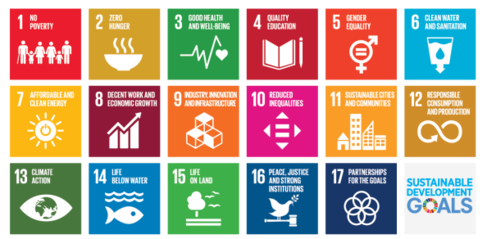
Our research and commitment across the School of Biological Sciences and Cambridge’s wider ecosystem aligns naturally with key UN Sustainable Development Goals, reflecting how biological science underpins sustainability across health, food systems, nature, climate, education and innovation.